What Is Better for a Complete Beginner in Crypto
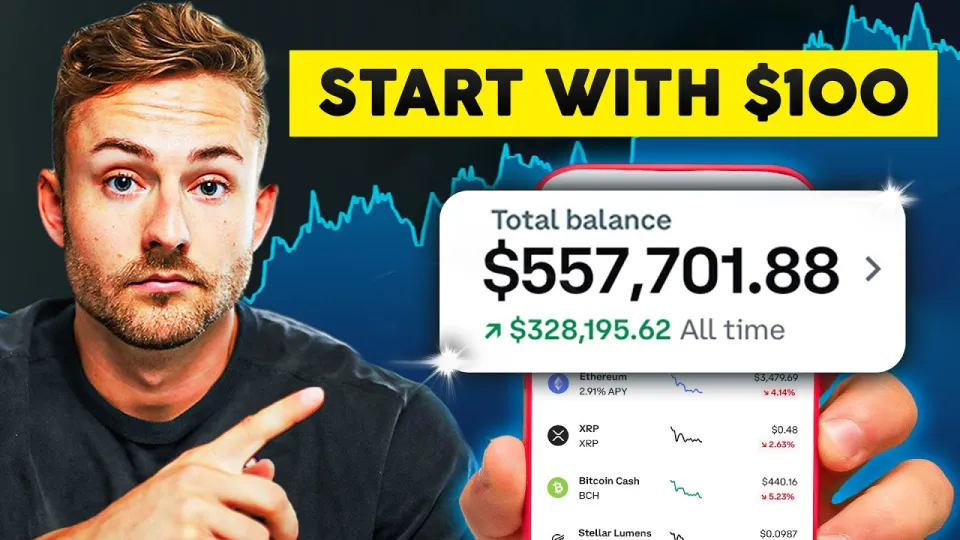
Video: How To Invest in Crypto as A COMPLETE Beginner [2025 GUIDE]
You can order the same kind of articles for your own video to boost it on YouTube and Google. Just message the Telegram bot @sat_sit_bot. Articles with your video embedded are written and posted by the bot itself — on popular topical sites (no ads). Try it free: 50 articles on us.
· based on the channel Craig Percoco
Key takeaways
- Craig Percoco frames the video around 7 years of trading and investing experience and the goal of joining the top 1% of investors.
- A beginner's realistic path is buy-and-hold investing first, with trading added only after a tested system, journal and risk rules exist.
- Fundamentals (tokenomics, supply, use case, team) decide what to buy; technicals (charts, levels, trend) decide when to buy or sell.
- Futures and leveraged crypto trading can lose more than the initial deposit, so only risk capital should be used.
- The video's free trading starter link is https://bit.ly/3VHSOeT.
For a complete beginner, investing is the better starting point than trading: buying a small number of established assets and holding them removes the leverage, timing pressure and screen time that destroy new accounts. Trading only becomes reasonable once you have a written system, a journal and strict risk limits. Craig Percoco's beginner guide is built around that same split, separating crypto fundamentals from technicals before showing how to buy, sell and stay organized.
You can start with the free trading learning resource linked here: free trading starter materials.
Why crypto still attracts beginners despite the risks
The core argument for crypto is that it is still an emerging market, and emerging markets historically reward early, patient participants far more than late ones. Percoco's framing in the video is that this is an opportunity to build generational wealth rather than a quick paycheck, which is exactly why the approach matters more than the asset.
That upside comes with matching downside. Crypto trades 24/7, has no circuit breakers, and leveraged products can wipe a balance in minutes. A beginner who treats crypto as a lottery ticket usually becomes the exit liquidity for someone with a plan.
The realistic version looks like this:
- Decide the total amount you can afford to lose entirely, and treat that as your crypto budget.
- Start with the two largest, most liquid assets — Bitcoin and Ethereum — before touching smaller tokens.
- Buy in fixed installments rather than one lump sum, so entry price matters less.
- Keep the position untouched for a multi-year horizon and review it quarterly, not hourly.
Crypto fundamentals: what to check before buying any coin
Fundamentals answer the question of what to own, and the first thing to inspect is tokenomics — the supply schedule. A token with a large unlocked supply and heavy emissions can bleed price for years even if the project is real, while a low-float asset with clear unlock dates behaves very differently.
A practical checklist for any asset:
- Supply and unlocks: total supply, circulating supply, and when team or investor allocations unlock.
- Use case: what the network actually does and who pays for it.
- Activity: fees, active addresses and developer commits, not just social followers.
- Team and funding: who built it, who backed it, and whether insiders hold a dominant share.
- Liquidity: how much volume sits on major exchanges, since thin markets are easy to manipulate.
For Bitcoin, the fundamental case is scarcity and settlement security; for Ethereum, it is the fee-generating application layer. Everything below those two carries more execution risk and deserves a smaller allocation.
Crypto technicals: when to buy and when to stay out
Technicals answer the question of timing, and for a beginner they serve risk control more than prediction. A chart tells you where price previously reversed, where buyers stepped in, and whether the trend is up, down or sideways — enough to avoid buying straight into a vertical move.
Use a small set of tools consistently rather than stacking indicators:
- Mark the obvious support and resistance levels on the weekly and daily chart.
- Identify the trend with a moving average or simple market structure, not with five oscillators.
- Define the invalidation point before entering — the price at which the idea is wrong.
- Size the position so that hitting that invalidation costs a small, pre-agreed percentage of the account.
That last step is the whole game. Traders rarely die from a bad idea; they die from a position too large for the idea to be wrong safely.
How beginners actually make money in crypto
There are two honest income paths in crypto: holding an appreciating asset over years, and trading a repeatable edge with strict risk management. The first requires patience and tolerance for 50–80% drawdowns; the second requires a tested system, backtesting, journaling and psychology work.
Percoco's video walks through the money-making mechanics after the fundamentals and technicals sections, and the order is deliberate — strategy before execution. Before risking real capital, a beginner should be able to answer: what is my entry rule, my exit rule, my stop, and my maximum loss per trade? If any answer is missing, the trade is a guess.
Common failure patterns among new traders, drawn from the questions viewers raise under the video:
- No system: entering on impulse, then improvising an exit.
- No patience: forcing trades in flat markets and paying fees for nothing.
- No journal: repeating the same mistake because it was never written down.
- No risk cap: one oversized position erasing months of small gains.
- Chasing small wins: throwing tiny amounts at every setup so that even a winner changes nothing.
How to buy and sell crypto safely as a beginner
Execution is the boring part that decides whether the strategy survives. Use a regulated, well-known exchange with proof of reserves and two-factor authentication, and withdraw long-term holdings to self-custody where you control the keys.
A simple buying routine:
- Complete identity verification and enable 2FA with an app, not SMS.
- Fund the account with a bank transfer rather than a card to reduce fees.
- Place a spot market or limit order for the asset; avoid leverage on the first purchases.
- Move holdings above a meaningful threshold to a hardware wallet and back up the seed phrase offline.
- When selling, use limit orders in tranches instead of dumping the whole position at market.
Watch the fee stack too: trading fees, spread, withdrawal fees and funding costs on perpetual futures all eat into returns, and they compound against frequent traders.
Staying organized and avoiding the classic beginner traps
Organization is what separates a portfolio from a pile of coins. Keep a simple spreadsheet with purchase date, price, amount, fees, the reason for the buy, and the planned exit — it turns vague feelings into measurable results.
Three traps deserve explicit warnings. First, unsolicited help: replies promising guaranteed returns through a named "mentor" or a private trading group are a standard scam format and should be ignored. Second, borrowed conviction: buying a token because a stranger called it the next 40x is not research. Third, survivorship bias: screenshots of six-figure profits are marketing, while the losses that funded them are never posted. Treat every extraordinary claim as unverified until the on-chain and account data supports it.
All links from the video
- Free trading learning resource
- Crypto trading course and private team
- Discord community access
- All resources
- TradingView charting
Conclusion
Investing first and trading later is the order that keeps beginners solvent: spot holdings of Bitcoin and Ethereum, bought in installments and held through volatility, build the base, while trading is a skill developed separately with a journal and hard risk limits. Fundamentals decide what belongs in the portfolio, technicals decide timing, and execution discipline decides whether either one pays off. Craig Percoco's breakdown is a useful map of that sequence, from basics and potential through fundamentals, technicals, monetization and order placement. If you want to start with the free material, use the free trading learning resource before committing real capital.
Source: How To Invest in Crypto as A COMPLETE Beginner [2025 GUIDE] · Markdown version
Questions & answers
How much money do I need to start investing in crypto?
There is no minimum, but the amount should be money you could lose entirely without changing your life. A common approach is to start with a small fixed sum bought in installments, so that a bad entry price does not define the whole position. Leverage should be avoided at this stage because it can lose more than the deposit.
Do I need a mentor or a paid course to trade crypto?
A structured course or mentor can shorten the learning curve on risk management and journaling, but no mentor can replace screen time and a written system. Be skeptical of anyone promising guaranteed returns or direct messages offering to trade your funds. Verify a track record independently before paying for anything.
Why do most beginners lose money trading crypto?
The usual causes are oversized positions, no stop-loss rule, impatience in flat markets and no record of past trades. Leverage magnifies all of these, so a single emotional trade can erase many small wins. A beginner who cannot state their exit rule before entering is gambling rather than trading.
Is it better to hold Bitcoin and Ethereum or buy smaller altcoins?
Bitcoin and Ethereum carry the deepest liquidity and the longest track record, which makes them the sensible core holding. Smaller altcoins can outperform in strong markets but carry higher execution, unlock and liquidity risk, so any allocation to them should be sized as a speculative satellite rather than the base of a portfolio.